
What to know: The 50th AIG Women's Open runs July 30-August 2 at Royal Lytham & St Annes. Nelly Korda, Haeran Ryu and Lydia Ko form the headline group, while defending champion Miyu Yamashita, Charley Hull, Jeeno Thitikul and Lottie Woad begin with different but equally compelling tests. Official Thursday coverage is scheduled from 8:00 a.m. to 6:00 p.m. UTC.

The marquee group measures three kinds of major confidence
Korda, Ryu and Ko bring the clearest concentration of major credentials in Thursday's draw. Korda arrives as the U.S. Women's Open champion. Ryu won the KPMG Women's PGA Championship and then added the Amundi Evian Championship. Ko has already proved she can win this event, taking the title in 2024.
The grouping is useful beyond star power. Korda can shorten Royal Lytham with length, Ryu brings the sharpest major-season evidence, and Ko remains one of the game's most adaptable course managers. Their cards will show whether the opening round rewards aggressive carries or a conservative sequence of fairways and greens.
Royal Lytham announces the challenge immediately
The course starts with a par 3 of roughly 180 yards, an unusual opening assignment that offers no gentle way into the championship. Five bunkers guard the green. A player who misreads the wind can face a sand save before making a full driver swing, while a committed shot to the center can settle nerves and establish the day's ball flight.
The 445-yard par-4 third supplies the first sustained stress. Nine bunkers frame a fairway that narrows where longer drives finish. It can separate useful distance from uncontrolled distance. Watch where contenders miss: the safest pattern may be short of trouble rather than beside it.
The 50th staging has a fitting setting
The championship's official account framed the return to Royal Lytham around its milestone edition. The venue last hosted in 2018, when Georgia Hall won, and its women's champions also include Annika Sörenstam, Catriona Matthew and two-time Lytham winner Sherri Steinhauer.
Six months until Royal Lytham & St Annes ✨
— AIG Women’s Open (@AIGWomensOpen) January 30, 2026
The 50th AIG Women's Open takes place this summer, get your tickets today! 🎟️ pic.twitter.com/85fy5kOdSF
Hull and Woad carry the home question
Hull has finished runner-up in this championship twice in the past three editions. Her speed and imagination fit links golf, but Lytham will test how often she can turn aggression into a specific target rather than an emotional response. Chasing after an early bunker mistake can compound the damage.
Woad represents a different English storyline. The expectation around her has grown rapidly, yet an opening round at Lytham rewards boring decisions as much as spectacular shots. If she keeps the ball below the hole and away from fairway bunkers, the crowd can stay engaged without requiring a low-percentage recovery.
The seventh offers opportunity with a warning attached
The 586-yard par-5 seventh looks like the clearest birdie chance for powerful players. It also contains 14 bunkers and a long, narrow green protected by six of them. The hole should expose each player's risk threshold: reaching in two may produce an eagle putt, but only after a drive finishes in the correct corridor.
The short par-3 ninth presents the opposite calculation. It has produced four holes-in-one in the championship since 2001, including two in 2018, but bunkers ring the green. A favorable wind can make the flag look inviting. The more revealing shot may be the one aimed safely away from a tucked location.
Defending is different from repeating
Yamashita begins as defending champion after winning at Royal Porthcawl in 2025. That proves she can handle this championship's final-round pressure, but it creates no shortcut at Lytham. Different bunker positions, sight lines and wind directions make this a new examination.
Her round should be judged less by comparison with last year's winning score than by the quality of her misses. A player who avoids short-sided bunker shots can remain close even when putts do not fall. That is the patience a four-day defense requires.
What the first-round leaderboard will really say
An early lead matters, but the shape of the round matters more. Count bunker visits, approaches played from rough and pars saved after missed greens. A low score built on repeated fairways is more sustainable than one rescued by long putts. A player near par who repeatedly chose the correct side may be positioned better than the number suggests if conditions worsen.
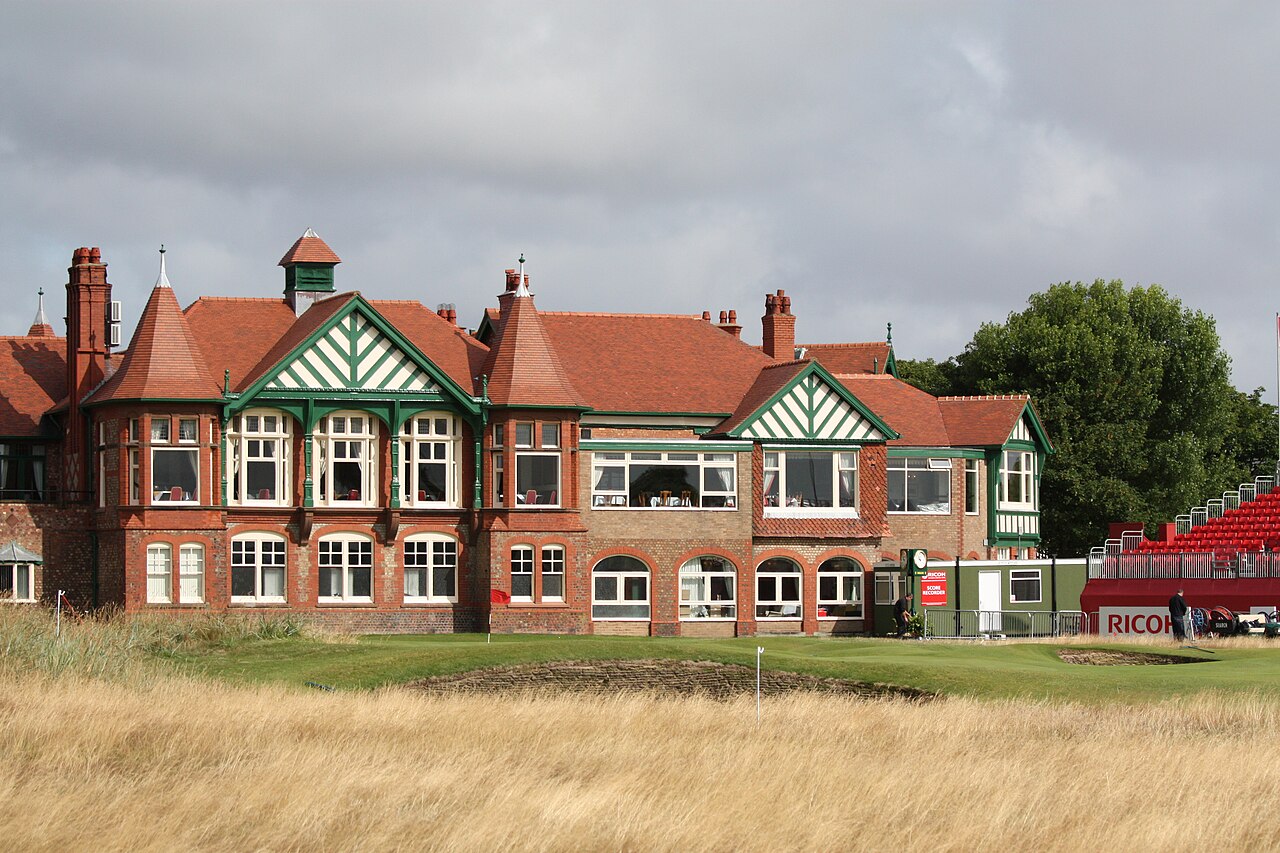
The closing stretch from the 14th pressures that discipline. Out-of-bounds, blind lines and fairway bunkers make hesitation expensive. By the clubhouse beside the 18th green, viewers should know which contenders trust their targets and which are reacting to hazards.
How to follow Thursday
The LPGA tournament page lists live coverage from 8:00 a.m. to noon UTC and noon to 6:00 p.m. UTC Thursday. Availability varies by market, so viewers should confirm the local broadcaster through the official tournament page. Live scoring is available through the official leaderboard and app.
Start with the opening par 3, then check the third and seventh before following the closing five holes. Those checkpoints reveal wind, driving control, risk tolerance and late-round commitment—the four signals most likely to explain the leaderboard by sunset.