
What to know: The 50th AIG Women's Open runs July 30-August 2 at Royal Lytham & St Annes in Lancashire, England. The official field includes Nelly Korda, Jeeno Thitikul, Charley Hull, Haeran Ryu, Lottie Woad and defending champion Miyu Yamashita. Early coverage begins at 8:00 a.m. UTC Thursday and Friday, followed by afternoon windows through 6:00 p.m. UTC.

A landmark edition returns to a proven venue
Royal Lytham is hosting the championship for the sixth time and the first since Georgia Hall won in 2018. Its earlier women's champions form an exceptional list: Sherri Steinhauer won here in 1998 and 2006, Annika Sörenstam in 2003 and Catriona Matthew in 2009. The venue has also staged The Open 11 times and two Ryder Cups, so its championship credentials are settled.
The history identifies the kind of test ahead. Lytham is a links course, but it does not rely only on exposed terrain and changing wind. Its defining defense is the placement and quantity of bunkers. Players who repeatedly choose an aggressive line without controlling start direction can lose shots before weather becomes the main problem.
Royal Lytham sets the stage for the 50th championship
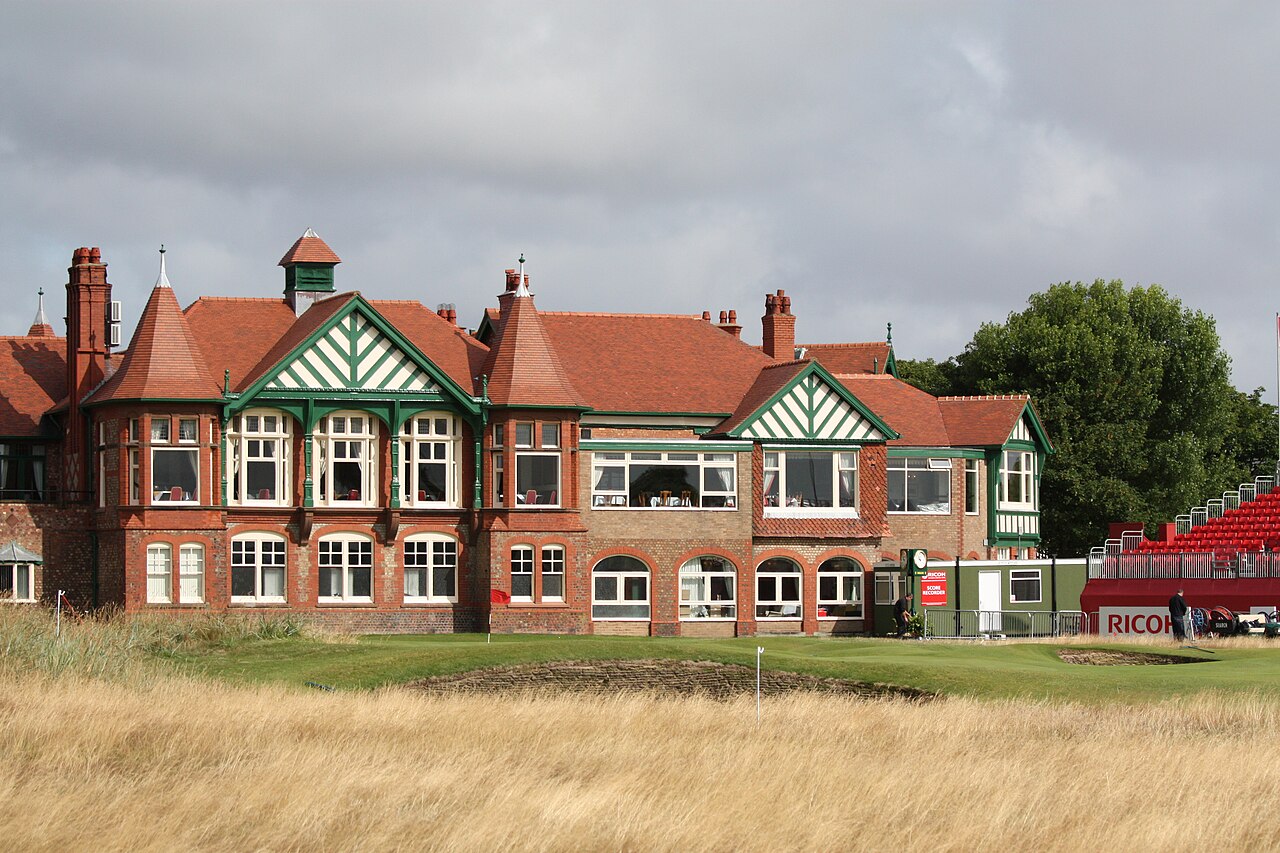
The championship’s official announcement connects this milestone edition directly to Royal Lytham. Its images place the trophy against the same clubhouse backdrop players will face beside the closing green.
Six months until Royal Lytham & St Annes ✨
— AIG Women’s Open (@AIGWomensOpen) January 30, 2026
The 50th AIG Women's Open takes place this summer, get your tickets today! 🎟️ pic.twitter.com/85fy5kOdSF
The first hole removes the luxury of easing in
Lytham opens with a par 3 of about 180 yards, guarded by five bunkers. There is no broad driving area where a tentative swing can still find grass. Depending on wind and hole location, the opening shot may require a hybrid or fairway wood into a green where missing on either side brings sand into play.
The assignment is bigger than one score. A committed, correctly flighted opening shot can establish the swing required for the day. An indecisive start creates an immediate recovery test. At a championship where patience will be essential, the first tee demands precision before patience has time to settle in.
Holes 3 and 7 reshape cards for opposite reasons
The par-4 third is listed at 445 yards and identified by the official course guide as Lytham's most difficult hole. Nine bunkers narrow the options, the fairway tightens where longer drives finish, and a deep bunker behind the left side of the green punishes an approach that carries too far. Par should feel like a gain when conditions strengthen.
The seventh is a 586-yard par 5 with 14 bunkers. Length creates opportunity, but only after position. Even the longest players may need a fairway wood to reach in two, while six bunkers surround a long, narrow green. It is a birdie chance that can quickly produce bogey when ambition outruns control.
The short ninth could generate the loudest moment
The par-3 ninth is only about 144 yards on the published card, yet its green is ringed by bunkers. It has produced more holes-in-one since 2001 than any other hole used in the championship: four, including two during the 2018 event. Every well-struck tee shot will feel possible when a receptive green and favorable wind align.
That reputation should not disguise the demand. A short iron still has to fly the correct distance and finish on the putting surface. Chasing a tucked flag can turn a routine par chance into a bunker save. The best choice may look conservative until another player misses by three yards and pays for it.
The closing stretch rewards restraint and execution
The 14th offers almost no comfortable miss: bunkers and sandhills sit right, heavy rough sits left, and out-of-bounds threatens near the green. The 16th begins a famous closing sequence with a blind tee shot and five greenside bunkers. The 17th has a tight fairway, and the 18th places bunkers down both sides beneath the view of Lytham's clubhouse.
Protecting a lead will not mean steering away from every hazard, because the defensive line can introduce a different one. Sunday's winner is likely to keep choosing specific targets rather than reacting emotionally to the leaderboard.
The field brings every major storyline together
The entry list includes world No. 1 Jeeno Thitikul, U.S. Women's Open champion Nelly Korda, KPMG Women's PGA champion Haeran Ryu and defending champion Miyu Yamashita. Charley Hull returns after runner-up finishes in 2023 and 2025, while Lottie Woad arrives as one of England's most closely watched players. Women's Scottish Open winner Jenny Shin adds links-form momentum.
No résumé eliminates the course questions. Korda's power can shorten the long holes, but Lytham asks powerful players to place the ball. Hull's local support and recent record create a compelling story, but expectation amplifies every missed chance. Yamashita has proved she can close this major, though a different links course resets the tactical problem.
How to watch—and what to watch first
The LPGA tournament page lists live coverage from 8:00 a.m. to noon UTC and noon to 6:00 p.m. UTC Thursday and Friday. Weekend windows begin at 11:00 a.m. UTC and continue to 6:00 p.m. UTC. Distribution varies by market, so viewers should confirm the listed broadcaster locally.
Watch ball flight before scores. The opening par 3 will reveal the wind. The third shows who is driving accurately enough to control the course, the seventh exposes risk tolerance, and the final five holes test whether leaders can keep making committed swings. Lytham's decisive statistic may be how often a player avoids asking for a heroic recovery from sand.
For official video, interviews and highlights, visit the LPGA tournament media hub and the official LPGA YouTube channel.